I give thee charge in the sight of God, who quickeneth all things, and before Christ Jesus, who before Pontius Pilate witnessed a good confession; that thou keep this commandment without spot, unrebukable, until the appearing of our Lord Jesus Christ (1 Timothy 6:13).
Our Lord was brought before Pilate as One who had made a claim to kingship. Standing as a prisoner, condemned, and without any visible palace, such a claim seemed preposterous. Altogether devoid of stately robes and courtly attendants and minus even crown or scepter, He nevertheless affirmed emphatically, “I am a king,” “My kingdom is not of this world.” Christ disclaimed the vainglory of a temporal diadem, but He did not deny His claim to crown rights of a nobler royalty than that shared by earthly rulers. Although He was betrayed, accused and mocked, yet with unflinching, undaunted courage He remained uncowed and uncompromising before the Roman regent; and by patient courtesy and perfect control, He vindicated the essential truthfulness of His superior sovereignty. Remember that within the confines of His Deity this Confessor dwells in light which no one can approach unto and which no man hath seen nor can see (1 Timothy 6:16).
If He deemed it wise and worthwhile to acknowledge His claim and right, soldiers of the Cross should learn a lesson from their Captain. “Though it doth not appear what we shall be,” let us be prepared to bear witness to the truth of the King’s return. Paul the aged, as he termed himself, had borne the burden and brunt of battle and was seeking a successor for his trusteeship. He admonishes Timothy to stick to his business and stand by His witness while focusing faith on the great File-leader. Confession of our faith in the truth of God is our solemn obligation and responsibility, likewise also confession of faith in Christ (John 18:37; Romans 10:9, 10). Jesus Christ as a confessor of truth is now glorified, and this fact should stimulate all of us to faithfulness in witness. The Savior testified concerning His kingdom of spiritual truth, of sovereign power, of steadfast righteousness and of sanctified citizenship. Said He, “For this cause came I into the world that I should bear witness unto the truth” (John 18:37). Is this not the very cause and core of the campaign in which we are enlisted? Let us see to it, while our comrades march to face the foe, while our fighting forces shout in the field, and while our friends pray for us in all fidelity, that we often and openly commend and confess Him while the opportunity is ours.
The people answered Him, We have heard out of the law that Christ abideth for ever (John 12:34).
Simon Peter answered and said, Thou art the Christ, the Son of the living God (Matthew 16:16).
The Christ of God is the hope of glory, for He is the glory of our hope. The title means the anointed One, appointed of God to guard and guide the redeemed host. The rare qualities of the Christ ravish the heart, renew the mind and refresh the soul to the utmost repleteness of satisfaction, until we become complete in Him. Christ in His fairness incorporates the fullness and faithfulness of Godhead bodily. He is the Fountain of ceaseless freshness and compassionate forgiveness; He is also the Foundation of constant friendship and consistent fellowship. The Christ is eminently gracious, extremely precious and exceptionally glorious. He is the Judge of the brutish, but the Justifier of the believer. His anointing attests His kingship and affirms His priesthood, by means of which offices He regains all authority from the adversary and reigns unabatingly through the ages.
Christ is the supreme One in a special sense: He is indivisible in purpose, irresistible in integrity and invincible in strength. His ministry was governed by one superior motive. He was ever in perfect harmony with the mind of heaven, engrossed and enthralled by the Father’s will. His whole being was girded with glorious strength, He was anointed by almighty authority, robed in resolute righteousness and went into battle against the foe fully armed with the accouterments of moral valor and spiritual virtue. The enemy’s glamorous reserves of angels, principalities and powers were amassed in clamorous array to defeat Him. At the central arena of the conflict stood a brutal cross, the emblem of shame and contempt to which wicked hands had nailed Him. The amalgamated forces of evil were enlisted against Him, the power of death was in the hand of the enemy, the whole weight of infernal hatred, diabolical malice and fiendish enmity confronted Him in that crucial hour; but His armor was impenetrable. He triumphed gloriously and made a full exposure of the great adversary (Colossians 2:15), a conquest which entitled Christ to hurl the deceiver from the battlements on high (John 12:31). This Christ is our conqueror valiant in victory. His eternal triumph is attended with resurrection mastery, ascension glory and coronation majesty. The Devil is thoroughly defeated and completely vanquished.
Jesus you, the Messiah of God is the hope of glory, for you are the glory of my hope. Your title means the anointed One, appointed of God to guard and guide the redeemed host. Your rare qualities ravish my heart, renew my mind and refresh my soul to the utmost repleteness of satisfaction, until I become complete in you. Messiah Jesus your fairness incorporates the fullness and faithfulness of Godhead bodily. You are the Fountain of ceaseless freshness and compassionate forgiveness; you are also the Foundation of constant friendship and consistent fellowship. You are eminently gracious, extremely precious and exceptionally glorious. You are the Judge of the brutish, but the Justifier of the believer. Your anointing attests your Kingship and affirms your Priesthood, by means of which offices you regained all authority from the adversary and reign unabatingly through the ages.
Messiah Jesus you are the supreme One in a special sense: you are indivisible in purpose, irresistible in integrity and invincible in strength. Your ministry is governed by one superior motive. You are always in perfect harmony with the mind of heaven, engrossed and enthralled by the Father’s will. Your whole being is girded with glorious strength, anointed by almighty authority, robed in resolute righteousness and you go into battle against the foe fully armed with the accouterments of moral valor and spiritual virtue. The enemy’s glamorous reserves of angels, principalities and powers were amassed in clamorous array to defeat you. At the central arena of the conflict stood a brutal cross, the emblem of shame and contempt to which wicked hands had nailed you. The amalgamated forces of evil were enlisted against you, the power of death was in the hand of the enemy, the whole weight of infernal hatred, diabolical malice and fiendish enmity confronted you Messiah Jesus in that crucial hour; but your armor was impenetrable. You triumphed gloriously and made a full exposure of the great adversary (Colossians 2:15), a conquest which entitled you to hurl the deceiver from the battlements on high (John 12:31). Messiah Jesus you are my conqueror valiant in victory. Your eternal triumph is attended with resurrection mastery, ascension glory and coronation majesty. The Devil is thoroughly defeated and completely vanquished.
Note: The English word Christ means Messiah. I prefer to use Messiah, using it helps me better remember that Jesus is Father God’s Sent and Anointed One.
Able is the Greek word dunatos, related to dunamis, meaning ability, abundance, capability, mighty works, miraculous power, prevailing strength. “God is able” means God has the mighty power to do a miraculous work out of His abundance and strength. Romans 16:25 says God is able to establish you. Listen to the richness of the verse when read with its full definition “God has mighty power to do a miraculous work out of His abundance and strength to establish you.”
Bring your inability to the ability of God. As you read these verses drink in the bigness of God as you replace “able” with “has the mighty power to do a miraculous work out of His abundance and strength.”
God is … Able to give much more. 2 Chron 25:9 Able to deliver from fire. Dan 3:17 Able to raise up children of Abraham from stones. Mat 3:9 Able to give sight to the blind. Mat 9:28-29 Able to destroy in hell. Mat 10:28, James 4:12 Able to perform what He promised. Rom 4:21 Able to graft in the Gentiles. Rom 11:23 Able to make you stand. Rom 14:4 Able to establish you. Rom 16:25 Able to make a way through temptation. 1 Cor 10:13 Able to make all grace abound to you. 2 Cor 9:8 Able to do exceedingly beyond all your asking. Eph 3:20 Able to subdue everything under His control. Phil 3:21 Able to keep all we have committed to Him. 2 Tim 1:12 Able to help the tempted. Heb 2:18 Able to save from death. Heb 5:7 Able to save completely, to the utmost. Heb 7:25 Able to raise men from the dead. Heb 11:19 Able to keep you from falling and to present you before His presence without fault and with great joy. Jude 24
To the only God our Savior be glory, majesty, power, and authority, through Jesus Christ our Lord, before all ages, now and forevermore! Amen. Jude 25
“God is far more likely to use pain, suffering, sorrow, grief, troubles, and such to grow us up into the character and image of His Son than He is to use happy times and pleasure. I know what I like better.”
“There is a reason that James says to ‘count it all joy when you encounter various trials’ and Paul says, ‘not only this but we also exult in our tribulations‘. What would it be like to rejoice in the goodness of the Lord in the difficult times that He brings into our lives to accomplish good things in us?”
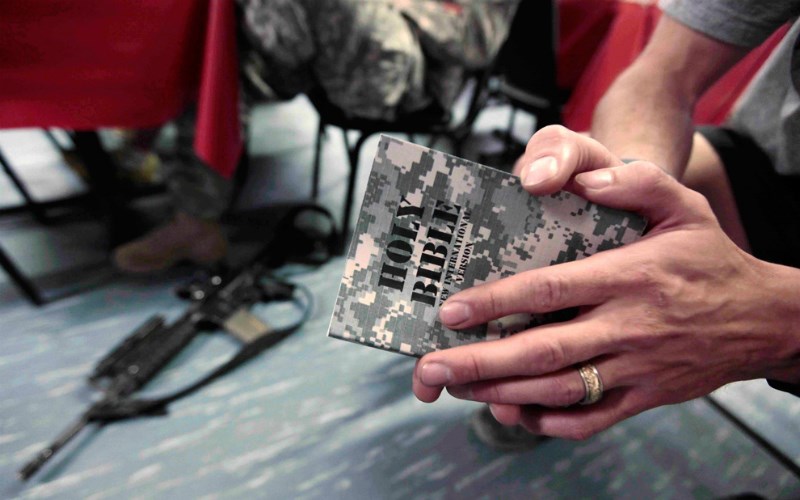
“The Army has a term I like. ‘Embrace the suck’. The understanding that you will be in environments that are difficult, painful, stressful, etc. You endure it. Hebrews says of Jesus, ‘Who, for the joy set before Him, endured the cross, despising the shame…‘”
Shared with permission, written by an Airborne Artillery Officer.
Zechariahs Prophecy. Yet another cannonball-sized movement in my heart from the Spirit.
Luke 1:78-79
78 “because of the tender mercy of our God,
whereby the sunrise shall visit us from on high
79 to give light to those who sit in darkness and in the shadow of death,
to guide our feet into the way of peace.”
Those last four words are what did it for me. ‘The way of Peace‘. That sounds like a distant dream for me right now. We were up nearly all night trying to figure out how to calm our two-week-old Son; ultimately, we tried everything and made him so overtired that he didn’t fall asleep until he was on his Mom’s chest around 3 am.
These days feel like combat for me, far from the way of peace. The days are unpredictable, and there seems to be no routine despite our efforts to set one. It’s combat. That’s the only way I know how to describe it. I thought last night, during the chaos of my all-nighter air assault mission that led directly into another movement at 3 am during my artillery platoon’s evaluation cycle at the National Training Center before deploying to Iraq. I remember feeling so deflated when I was called to the commander’s Humvee less than an hour after finishing this long, drawn-out failure of an air assault mission. I couldn’t believe I was going to have to do it again, and I was going to have to lead another platoon movement to a new firing position. This was insanity, and I could barely keep my eyes open. I remember leading the convoy, literally dozing in and out under my night vision goggles…
Yep, that’s how the nights feel right now. Exhausted and battered, only to be called to the commander’s Humvee again and again. So why do those words ‘the way of peace‘ stand out to me so much? In my angry prayers for respite last night, I began to sense that this was indeed a time of testing from the Lord. How to answer the test? I haven’t figured it out yet. Except that these words this morning point me back to the purpose and mission of Jesus. And to the way in which he accomplished it.
In my journey of faith, at least in recent years, I don’t think I have been physically and emotionally tested in the way that I am now. So, what does this mean, Lord?
He leads my eyes back to verse 79… “to give light to those who sit in darkness and in the shadow of death.” Wow, I actually chuckled to re-read that. That’s exactly how it feels in the midnight hours—sitting in literal darkness, under the shadow of death, in this case, death being physical exhaustion and weariness. But the word clearly states that Jesus will be a light in this place, and that he will guide us out of it, into the way of peace.
Hebrews 12:11
“For the moment, all discipline seems painful rather than pleasant, but later, it yields the peaceful fruit of righteousness to those who have been trained by it.”
Thinking back to that all-nighter air assault mission. Why did they [the evaluating cadre] allow it to go on for that long? How was it beneficial? It taught me how to keep going. When there is nothing left. Literally nothing. It taught me to endure. To put on my helmet, brief the platoon, and get moving. To get through the breach and know that there would be rest on the other side, at some point.
I don’t know that I can pinpoint a time in Iraq when this testing came to bear fruit. Except maybe the night our howitzer exploded, and a mass casualty event kept us awake until the sunrise. And what did I do then? I got it done, and eventually I slept when it was all said and done.
The way of peace is narrow, as Jesus himself said it. The way of being a new parent is rough. And I have a choice to make, each and every night. I have to choose that I am going to trust the one who is training me. I have to choose that I will believe in the fruit it will yield.
Prayer
Jesus, as you always do, thank you for giving me space and clarity to write. To think through these things occurring in life. To see, to hear, and receive your teaching. My heart is full again now that I have understanding. My heart has joy to know it is all for good. Jesus, I will try, I will not quit, but will keep on trying to commit my heart to you during these late nights. Teach me when to engage our Son. Teach me Lord, to be following your way for my feet, and to let go of my own way.
It is a great privilege to share with you my experience as a broken man with a mighty God. The older I get, the more impressed I am with Him and the less impressed I am with me.
I think Hebrews 12 has great advice for us. “Let us run with endurance the race that is set before us, fixing our eyes on Jesus, the author and perfector of our faith.” Endurance is basically hanging in there, moving on when we would rather stop. I have run a 20 miler. The question at mile 17 was no longer whether I could run again, but whether I could keep walking.
Our couple’s study was working on James 2 last night and our discussion helped my understanding. Faith is an ongoing connection with God. It is not a one-time intellectual assent to God’s existence. The noun (faith) and the verb (believe) share the same root word. Our faith grows to the extent that we grow in our connection and relationship with Jesus.
Pick up the Bible, listen to the voice of God as He speaks. Respond to Him. It is as simple and profound as it gets.
Nobody does it well all the time. Nobody gets it right all the time. No one. And it is ok because every believer has been clothed in the righteousness of Christ, all our sins have been forgiven, we have been adopted into His family, we are completely loved and accepted, we have eternal life. Incredible.
When Thanksgiving rolls around, I am drawn to Hebrews where it says, “Through Him, then, let us continually offer up a sacrifice of praise to God, that is, the fruit of lips that give thanks to His name.” Giving thanks is a sacrifice we give to God. Proud people are never thankful, they are entitled, they deserve it. Humble people recognize that everything they have that is good comes from the hand of our loving Father (the bad and the good). And we give thanks.
“For by Him were all things created, that are in heaven, and that are in earth, visible and invisible, whether they be thrones, or dominions, or principalities, or powers: all things were created by Him, and for Him (Colossians 1:16; also John 1:3; Hebrews 1:2).”
“Creation, revelation and incarnation are the three mightiest strands of witness available to us in aiding our minds to comprehend the reality of God. The creation demonstrates His power and appeals to the human reason, the revelation declares His purpose and appeals to the human conscience, while the incarnation displays His presence and appeals to the human heart. In creation, the mighty and the mite, the stupendous and the small, the tremendous and the tiny, the lofty and the lowly contribute their witness to His intricate work and infinite wisdom.”
“The enormous range of creation is beyond our powers of comprehension. Some worlds are so ponderous that human means of reckoning cannot estimate their size. Stars are so numerous, human calculation cannot determine their measure their expanse. Ages are so tremendous, human conception cannot comprehend their dimensions. How impotent and incompetent man appears in the light of such magnitudes! Well did David remark, ‘What is man, that Thou are mindful of him?’ (Psalm 8:4).”
“Within the bounds of our understanding, when we behold the height of the heavens, the sublimity of the sky, the splendor of the stars, the luster of light and the cosmos of color, we admire with wonder the celestial regions. In the sphere of our physical surroundings we may have our senses engaged and enriched by the symphony of sound, the melody of music, the majesty of mountains, the shimmer of streams, the variegation of valleys, the foliage of forests, the fullness of fountains, the flavors of fruits, the beauty of birds, the glint of gems, the sparkle of sapphires and the gleam of gold.”
“Even greater values than these await us in the spiritual realm, where we learn to revel in the triumph of truth, the kindness of kinship, the fidelity of friends, the sympathy of souls, the touch of tenderness, the character of constancy, the raiment of righteousness, the joy of justification, the happiness of hope, the pleasure of peace, the luster of love, the vestments of virtue and in millions more of such marvels which are all marked with the tracery of His fingers and the impress of His creative hands. ‘Without Him was not any thing made that was made’ (John 1:3). Marvel of marvels that such a Dignitary should submit tot he cruelty and crime of being crucified and become involved in what was known as ‘the scandal of the cross.’”
Charles J. Rolls, The Indescribable Christ: Names and Titles of Jesus Christ: A-G (Loizeaux Brothers, 1984).
An Army chaplain awaits word on his forced separation from the military, pending the Senate’s decision on the 2023 National Defense Authorization Act, which could bring the military vaccine mandate to an end.
For Army Chaplain Brad Lewis, the last 15 months have seemed like a decade. Within days of Secretary of Defense Lloyd Austin’s COVID-19 vaccine mandate in August 2021, Colonel Lewis – who became a chaplain due to religious conviction – requested a religious accommodation to the mandate. His request was denied in February 2022, and within two days he submitted an appeal to the Assistant Secretary of the Army. Eight weeks ago, that, too, was denied.
When he received the denial of his appeal, he was given two options: either voluntarily submit for retirement, or voluntarily get vaccinated. He tells American Family News that he didn’t feel he could, in good conscience, step away from “a fight just to save my own skin.” To him, both options were unacceptable, explaining he felt it was “immoral” being forced to choose between his faith and his career.
“I would love to have a retirement after the better part of three decades, but if it means the next generation of chaplains and soldiers are able to get a retirement at the expense of mine, then I’m willing to do that,” Lewis asserts. “[So] rather than assist in the death of a retirement it took nearly 27 years to earn, I left the ball in the Department of Defense’s court to separate me.”
Once his appeal was denied, Lewis says, he was immediately labeled a “vaccine refuser.” According to Army Directive 2022-02, issued by the Secretary of the Army, Christine Wormuth in January 2022, an officer who refuses to be vaccinated will be involuntarily separated for “misconduct, moral or professional dereliction.” And those who are involuntarily separated for this reason are “normally” separated under other-than-honorable conditions according to Army Regulation 600-8-24.
According to Lewis, that characterization of service “carries with it some pretty significant curtailments of veterans benefits.”
“Without saying it, they were threatening my retirement,” he contends. “It’s not just my retirement they were threatening, but the retirement of every other soldier in the Army.”
And that, coupled with his religious convictions, compelled him to take the stance he did.
For standing firm, there’s cost … or there’s reward
As part of the separation process, on Monday Chaplain Lewis was to be given a General Officer Memorandum of Reprimand (commonly known as a GOMOR) as a result of his objection to the COVID-19 vaccine and the denial of his accommodation request.
But in the eleventh hour, he was told by his command that the GOMOR would be put on hold until the Senate decides how it will respond to the U.S. House’s passage of the National Defense Authorization Act (NDAA), which is expected to repeal the military vaccine mandate.
“If someone doesn’t stand up and say You can’t do this, then it’s just going to continue,” Lewis contends. “The scope of religious accommodation denials indicates a pretty severe anti-religious bias in the DOD,” he says. “And as a chaplain, I had to stand up and say we were not going to play that game.”
The chaplain argues that the job of the DOD is not to determine whether an individual’s beliefs are valid, but whether they are sincere; and if sincere, the government should accommodate those beliefs, according to the U.S. Constitution, the Religious Freedom Restoration Act (RFRA), NDAA, Army doctrine, and more.
Regardless of the outcome, one thing remains true through it all, according to Lewis: “God is bigger than the Army and is always good.”
In the summer of 2001, Harriet Bograd decided to visit her daughter Margie, who had taken a summer job in a remote village in Ghana.
When Ms. Bograd and her husband, Ken Klein, arrived in the village, Sefwi Wiawso, they learned about its community of two dozen families who considered themselves Jewish, even if religious authorities in Israel and elsewhere did not.
In the week she was there, Ms. Bograd, whose husband called her “one of life’s great enthusiasts,” turned her enchantment with the villagers into a practical project that has become a major source of income for the community. She guided artisans in fashioning the colorful kente cloth sold in the local market into covers for the braided challahs that observant Jews bless and eat during Sabbath and holiday meals. A trained lawyer, she set the community up as an incorporated business that sold the challah covers across the United States for $36 apiece. Thousands have been purchased.
In the years after that trip, Ms. Bograd worked with the nonprofit organization Kulanu, which supports “isolated, emerging or returning” Jewish communities in places where even most American Jews don’t realize there are Jews: Uganda, Tanzania, Nigeria, Cameroon, Madagascar, Indonesia, Pakistan, Guatemala, the Philippines and more — 33 countries in total. These are people who for generations have kept some fundamental Jewish laws, like resting on the Sabbath and abstaining from certain foods, but that may have had only opaque ideas of their community’s Jewish origins.
Ms. Bograd with her husband, Ken Klein, on a trip to Ghana in 2001. Her experience there motivated her to join Kulanu.Credit…Joseph Kwame Nipah, via Kulanu
They trace their Jewish roots to a variety of sources: the 10 lost tribes that were dispersed by the Assyrian conquest of the Kingdom of Israel in 722 B.C.E.; the Spanish and Portuguese inquisitions, which, starting in the late 15th century, scattered thousands of Jews in far-off lands, where many practiced their religion in secret; century-old conversions by communal leaders more attracted to the Old Testament than the teachings of Christian missionaries.
“It gave her such joy that these Jewish people felt they were connected to the greater Jewish world and felt they belonged,” Mollie Levine, the deputy director of Kulanu, said in an interview.
Ms. Bograd died on Sept. 17 in a Manhattan hospital. She was 79. Her daughter Rabbi Margie Klein Ronkin said the cause was complications of heart surgery.
So exhilarated was Ms. Bograd by her experience in Ghana that she promptly joined the board of Kulanu. By her death, she had served as its president for 14 years. The organization’s headquarters were in the study of her Upper West Side apartment.
Under her command, the organization, whose Hebrew name means “all of us,” raised funds to build synagogues in Uganda and Zimbabwe; a Jewish-themed primary school in Uganda that is open to Christians and Muslims; and a mikvah — a ritual bath — in Tanzania. With a budget of around $500,000, Kulanu has also provided rabbinical training and advanced classes in Judaism at American seminaries for community leaders and distributed prayer books, Torah scrolls, prayer shawls and other ritual items.
Kulanu’s work has not been without controversy. While Jews in Ethiopia have been recognized by the Orthodox authorities in Israel as authentically Jewish, those in other parts of Africa have not been. Efforts by Conservative rabbis to formally convert some Africans to Judaism have encountered challenges because the Orthodox establishment in Israel does not recognize the legitimacy of Conservative rabbis. Bonita Nathan Sussman, Kulanu’s new president, said that many Africans also reject conversion, arguing, “Who are you to tell me I’m not Jewish?”
On the other hand, Ms. Levine said, Ms. Bograd “met them at the level where they are.”
She was active in Jewish causes in New York as well. In the early 1980s, she and other parents partnered with educators to found the Heschel School, a Jewish day school in Manhattan that now enrolls about a thousand students. And at the West End Synagogue, a Reconstructionist congregation, she was known for the warm way she greeted newcomers, an act congregants affectionately called “Bograding.”
Harriet Mary Bograd was born on April 6, 1943, in Paterson, N.J., into a Conservative Jewish home. Her father, Samuel Bograd, owned an upscale furniture emporium with an uncle. Her mother, Pauline (Klemes) Bograd, sometimes helped him with his business and was a leader in a local chapter of Planned Parenthood.
Harriet attended a special high school operated by Montclair State Teachers College (now Montclair State University) and graduated from Bryn Mawr in 1963 with a degree in political science. The summer she graduated, she arranged for a group of nine white Bryn Mawr students to teach at Livingstone College, a historically Black college in Salisbury, N.C., so they could absorb the impact of the growing civil rights movement.
A 1963 yearbook photo of Ms. Bograd. She graduated from Bryn Mawr that year and went on to Yale Law School.Credit…Special Collections, Bryn Mawr College Libraries
One of 11 women in her class at Yale Law School, she graduated in 1966. Rather then joining a law firm, she went to work for an organization in New Haven, Conn., that represented indigent clients in matters like access to medical care and trained local residents to be advocates for themselves and their neighbors. She helped start a day care center in New Haven, joined with other parents and teachers in a drive to improve local public schools and campaigned for the government to approach drug addiction as a crisis of health and poverty rather than a crime.
She married Mr. Klein, a tax lawyer, in 1977. In addition to her daughter Rabbi Klein Ronkin, he survives her, as do another daughter, Sarah Klein; a sister, Naomi Robbins; and two grandchildren.
When Ms. Bograd received a diagnosis of Stage 4 breast cancer in 1997, with a bleak prognosis, it only made her more determined to use her remaining time for the Hebrew concept of tikkun olam — “repairing the world” — and for her work with Kulanu.
Jonathan Sarna, a professor of American Jewish history at Brandeis University, said that Ms. Bograd also saw Kulanu as a vehicle to expand the mainstream Jewish sense of what Jews are supposed to look like.
“She felt it enhanced American Judaism,” he said, “to recognize that all Jews are not white and European.”
Joseph Berger was a reporter and editor at The New York Times for 30 years. He is the author of a biography of Elie Wiesel, which is scheduled for publication in February. @joeberg
A version of this article appears in print on Nov. 25, 2022, Section A, Page 23 of the New York edition with the headline: Harriet Bograd, 79, Guide and Mentor To Jewish Communities Around World
“This is one of the best explanations on how our civil and military leadership work together to ‘Support and Defend’ our Constitution. ” Sergeant Major Michael J. Weiss, Sr., U.S. Army Retired
We are in an exceptionally challenging civil-military environment. Many of the factors that shape civil-military relations have undergone extreme strain in recent years. Geopolitically, the winding down of the wars in Iraq and Afghanistan and the ramping up of great power conflict mean the U.S. military must simultaneously come to terms with wars that ended without all the goals satisfactorily accomplished while preparing for more daunting competition with near-peer rivals. Socially, the pandemic and the economic dislocations have disrupted societal patterns and put enormous strain on individuals and families. Politically, military professionals confront an extremely adverse environment characterized by the divisiveness of affective polarization that culminated in the first election in over a century when the peaceful transfer of political power was disrupted and in doubt. Looking ahead, all of these factors could well get worse before they get better. In such an environment, it is helpful to review the core principles and best practices by which civilian and military professionals have conducted healthy American civil-military relations in the past — and can continue to do so, if vigilant and mindful.
1. Civilian control of the military is part of the bedrock foundation of American democracy. The democratic project is not threatened by the existence of a powerful standing military so long as civilian and military leaders — and the rank-and-file they lead — embrace and implement effective civilian control.
2. Civilian control operates within a constitutional framework under the rule of law. Military officers swear an oath to support and defend the Constitution, not an oath of fealty to an individual or to an office. All civilians, whether they swear an oath or not, are likewise obligated to support and defend the Constitution as their highest duty.
3. Under the U.S. Constitution, civilian control of the military is shared across all three branches of government. Ultimately, civilian control is wielded by the will of the American people as expressed through elections.
4. Civilian control is exercised within the executive branch for operational orders by the chain of command, which runs from the president to the civilian secretary of defense to the combatant commanders. Civilian control is also exercised within the executive branch for policy development and implementation by the interagency process, which empowers civilian political appointees who serve at the pleasure of the president and career officials in the civil service to shape the development of plans and options, with the advice of the military, for decision by the president. The chairman of the Joint Chiefs of Staff is not in the formal chain of command, but best practice has the chairman in the chain of communication for orders and policy development.
5. Civilian control is exercised within the legislative branch through the extensive powers enumerated in Article I of the Constitution, beginning with the power to declare war, to raise and support armies, and to provide and maintain a navy. Congress determines the authorization and appropriation of funds without which military activity is impossible. The Senate advises and consents on the promotion of officers to the pay grade of O-4 and above. The Senate is also charged with advising and consenting to certain senior-level civilian political appointees. Congress conducts oversight of military activity and can compel testimony from military or civilian officials, subject to narrow exceptions such as executive privilege. Members of Congress empower personal and committee staff to shape the development of policies for decision by the committees and Congress as a whole and thereby play an important role in civilian oversight of policy.
6. In certain cases or controversies, civilian control is exercised within the judicial branch through judicial review of policies, orders, and actions involving the military. In practice, the power to declare a policy/order/action illegal or unconstitutional is decisive because the military is obligated (by law and by professional ethics) to refuse to carry out an illegal or unconstitutional policy/order/action.
7. Civilian control is enhanced by effective civil-military relations. Civil-military relations are comprised of a dynamic and iterative process that adjusts to suit the styles of civilian leaders. Under best practices, civil-military relations follow the regular order of the development of policy and laws, which protects both the military and civilian control. Under regular order, proposed law, policies, and orders are reviewed extensively by multiple offices to ensure their legality, appropriateness, and likely effectiveness. However, regardless of the process, it is the responsibility of senior military and civilian leaders to ensure that any order they receive from the president is legal.
8. The military has an obligation to assist civilian leaders in both the executive and legislative branches in the development of wise and ethical directives but must implement them provided that the directives are legal. It is the responsibility of senior military and civilian leaders to provide the president with their views and advice that includes the implications of an order.
9. While the civil-military system (as described above) can respond quickly to defend the nation in times of crisis, it is designed to be deliberative to ensure that the destructive and coercive power wielded by the U.S. armed forces is not misused.
10. Elected (and appointed) civilians have the right to be wrong, meaning they have the right to insist on a policy or direction that proves, in hindsight, to have been a mistake. This right obtains even if other voices warn in advance that the proposed action is a mistake.
11. Military officials are required to carry out legal orders the wisdom of which they doubt. Civilian officials should provide the military ample opportunity to express their doubts in appropriate venues. Civilian and military officials should also take care to properly characterize military advice in public. Civilian leaders must take responsibility for the consequences of the actions they direct.
12. The military reinforces effective civilian control when it seeks clarification, raises questions about second- and third-order effects, and proposes alternatives that may not have been considered.
13. Mutual trust — trust upward that civilian leaders will rigorously explore alternatives that are best for the country regardless of the implications for partisan politics and trust downward that the military will faithfully implement directives that run counter to their professional military preference — helps overcome the friction built into this process. Civil-military teams build up that reservoir of trust in their day-to-day interactions and draw upon it during times of crisis.
14. The military — active-duty, reserve, and National Guard — have carefully delimited roles in law enforcement. Those roles must be taken only insofar as they are consistent with the Constitution and relevant statutes. The military has an obligation to advise on the wisdom of proposed action and civilians should create the opportunity for such deliberation. The military is required ultimately to carry out legal directives that result. In most cases, the military should play a supporting rather than a leading role to law enforcement.
15. There are significant limits on the public role of military personnel in partisan politics, as outlined in longstanding Defense Department policy and regulations. Members of the military accept limits on the public expression of their private views — limits that would be unconstitutional if imposed on other citizens. Military and civilian leaders must be diligent about keeping the military separate from partisan political activity.
16. During presidential elections, the military has a dual obligation. First, because the Constitution provides for only one commander-in chief at a time, the military must assist the current commander-in-chief in the exercise of his or her constitutional duty to preserve, protect, and defend the Constitution of the United States. Second, because the voters (not the military) decide who will be commander-in-chief, they must prepare for whomever the voters pick — whether a reelected incumbent or someone new. This dual obligation reinforces the importance of the principles and best practices described above.
Signatories:
Former Secretaries of Defense
Dr. Ashton Baldwin Carter William Sebastian Cohen Dr. Mark Thomas Esper Dr. Robert Michael Gates Charles Timothy Hagel James Norman Mattis Leon Edward Panetta Dr. William James Perry
Former Chairmen of the Joint Chiefs of Staff
Gen. (ret.) Martin Edward Dempsey Gen. (ret.) Joseph Francis Dunford Jr. Adm. (ret.) Michael Glenn Mullen Gen. (ret.) Richard Bowman Myers Gen. (ret.) Peter Pace
I appreciate folks who can evolve in their thinking. So I find it fascinating that many who are evolving are recommending the same way forward.
In March of 2020 Chuck DeGroat wrote a confessional titled, It’s Always Been About Love. He felt he’d forgotten that. A great many evangelicals feel similarly, including James K. A. Smith, N. T. Wright and Dallas Willard. Here’s Wright’s evolution over the last 30 years.
In 1992 Wright wrote about a “spiral path” of knowing reality, where the only access we have to reality “lies along the spiraling path of appropriate dialogue or conversation between the knower and the thing known.”[1]Few Christians understood what he meant by that.
Maybe that’s why in 1999 Wright sounded rather pessimistic. “We live at a time of cultural crisis. At the moment I don’t hear anyone out there pointing a way forward.”[2] He felt some Christians “put up shutters” while others capitulate to the post-Christian world. “My brothers and sisters, we can do better than that.”
But Wright wondered aloud who in the faith community has a way forward?And, if believers aren’t pointing a way forward, who else might? By 2013, Wright had found a who else.
That year DeGroat joined a small group of believers meeting with Wright. They were exploring faith and formation. DeGroat asked Wright for his best recommendation for a resource that explores spiritual maturation at depth. Without hesitation, he recommended Iain McGilchrist’s The Master and His Emissary: The Divided Brain and the Making of the Western World as a way forward. Wright called it is a “magisterial” work.
I can imagine a few reasons why. McGilchrist says findings in neuroimaging reveal how knowing reality is a spiraling path, a reciprocating flow between the right and left hemisphere of the brain. It turns out Wright’s intuitions were right on.
McGilchrist says the right hemisphere is the intuitive mind. The left is the rational mind. Since 95 percent of the western world biases the left brain, and most of Wright’s readers are western Christians, most couldn’t intuit what he was saying. Small wonder Wright was pessimistic.
But there’s more. McGilchrist notes how only the right hemisphere has direct contact with the outside world, the cultures passing through our gills. The left doesn’t. Since 95 percent of the western world biases the left brain, and most of Wright’s readers are western Christians, most do not touch, feel, taste that we live at a time of cultural crisis.
But there’s more. According to McGilchrist, it is only in the right hemisphere that we make a paradigm shift. In most cultural crises, the way forward requires shifting some paradigms. I have a hunch Wright read that and thought, That’s why there’s so little spiritual maturation at depth. The deepest part of our being is not beliefs but paradigms, unconscious assumptions shaping beliefs. Western Christians don’t go deep enough into anthropology, human nature.
James K. A. Smith, Professor of Philosophy at Calvin University, does. He notes how our anthropologies shape our theologies. He gets that from reading scripture as well as Iain McGilchrist. He cites McGilchrist’s work as a way forward for the church.
It’s no coincidence that DeGroat, Smith, and Wright are all now saying they missed the wider picture. Love. All three come from Reformed traditions formed by the Enlightenment, biasing word over image, language over metaphor. Language is the domain of the left hemisphere, which is narrowly focused. Most Reformed traditions embrace a narrow view of the cross, substitutionary atonement. Jesus died on the cross to satisfy God’s demands for justice. Law. DeGroat, Smith, and Wright are saying they missed love.
The good news has always been about love… and law. In other words, Jesus did die for our sins. But he did this for the joy set before him of “marrying” us, love, enduring the cross, despising the shame. On the cross, we were betrothed to Jesus as his bride. [Yes Love. Father so loved us he sent Jesus. Jesus so loved Father and us he came. Holy Spirit so loved Father, Jesus and us he helps us know them. Jesus is the true way to life (more than Zoe, Shalom); Becoming children of God the Father, betrothed to King Jesus and indweldt by Holy Spirit. This comment added by Michael J. Weiss]
It seems that Dallas Willard was moving in this direction in the last months of his life. Like Wright and Smith, he was despairing. Do people really change—even with all the available resources and practices and disciplines? With his good friend and neuro-theologian Jim Wilder, Willard was exploring how neuroscience is a way forward, developing a psychology of love.
I had a similar experience when I first read The Master and His Emissary. That was in 2010. It helped me see why so few Christians recognize our post-Christian age. McGilchrist helped me see why we don’t seem to have a way forward, and why so few ever make the necessary paradigm shifts. I didn’t feel quite so alone.
That same year I read Coming Apart: The State of White America, 1960-2010by Charles Murray, a religious skeptic. Yet he’s hoping for a fourth awakening in America. The first three were led by religion. But Murray rightly notes that religion no longer has cultural capital in America. It can’t lead the way. Neuroscience can, so Murray writes…
“The more we learn about how human beings work at the deepest genetic and neural levels, the more that many age-old ways of thinking about human nature will be vindicated. The institutions surrounding marriage, vocation, community, and faith will be found to be the critical resources through which human beings lead satisfying lives.”[3]
Wow. Neuroscience is a way forward. It can validate, corroborate, older Christian traditions and their understanding of human nature. They can be a resource for shalom, satisfying lives, seeking the well-being of all.
So… if you’re looking for a Valentine’s Day gift for a loved one who wants to evolve in their thinking, and seek a way forward… I highly recommend Iain McGilchrist’s work.
And there’s McGilchrist’s new book: The Matter With Things: Our Brains, Our Delusions and the Unmaking of the World. I bought the Kindle version and am currently making my way through it. I’ll report on it later, but I feel it’s reinforcing what a heckuva of lot of evangelicals smarter than me see as our way forward.
[1] N. T. Wright, The New Testament and the People of God, (Fortress Press, 1992), 35.
[2] N. T. Wright, The Challenge of Jesus: Rediscovering Who Jesus Was and Is(InterVarsity, 1999), 195.
[3] Charles Murray, Coming Apart: The State of White America, 1960-2010(Crown Publishing Group, 2012), 300.
I highly recommend you start receiving Michael’s blog and listen to his podcast!!!!
“The Gospel (Good News) is about how good God is and not how bad we are.” Michael Weiss




 J3Khai.fun